
Sell or Donate?

Decluttering is one of the most liberating steps you can take toward a calmer, more functional home. But once you've decided what to let go of, a common question arises: Should I donate this, or try to sell it?
As professional organizers, we've guided many clients through this exact decision point. The choice isn't always straightforward because emotions, time, potential earnings, and practicality all play a role. If an item is in good or excellent condition, it can be donated or sold; however, our recommendation is to strongly consider donating everything.
Ultimately, though, the decision is yours, so here's a framework to help you decide, so you can move forward without getting stuck with a pile of things you don’t want to keep.
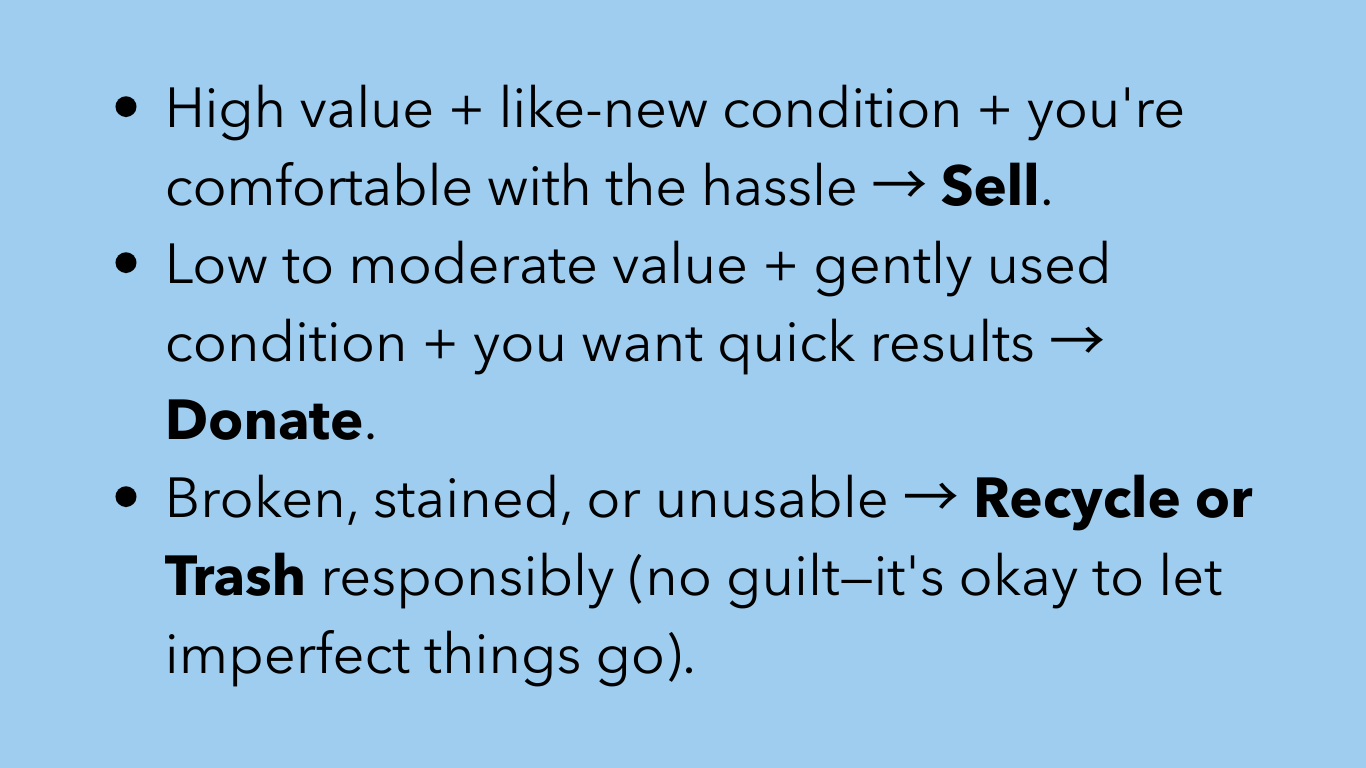
First, consider the item's condition and market value. Be honest with yourself. If it could not, in good conscience, be given as a gift to someone you care about, it should be discarded. Donation centers do not want items that are damaged or soiled, so save them the trouble and expense of throwing them away and do it yourself.
If the item shows some wear, is outdated, or falls into a low-demand category (think fast fashion, mismatched dishes, or old textbooks), the effort to sell will probably outweigh the return. Listing, photographing, communicating with buyers, shipping, and handling returns can take hours; hours that could be spent enjoying your newly cleared space. Additionally, by donating, you open up the possibility that someone less fortunate than you will have an opportunity to use and enjoy the items that no longer fit your needs. Load up the car, drop off at a local charity, and feel the immediate relief of progress. Many clients tell us that the emotional high from seeing their space transformed outweighs a potential monetary recoupment.
If an item is a brand that people actively seek secondhand (think quality clothing, designer accessories, electronics in working order, or collectibles), selling might be worthwhile. Platforms like eBay, Poshmark, Facebook Marketplace, or local consignment shops might be able to turn those items back into cash. People can sometimes recoup hundreds of dollars from gently used kitchen gadgets, children's toys, or furniture.
When deciding to sell, ask yourself: Do I want this process to wrap up quickly, or am I willing to stretch it out over weeks or months? Selling requires ongoing attention—monitoring listings, meeting buyers, or packing boxes. Also, be honest with yourself about whether you are actually capable of -or willing to go through- the process of selling things. If you have successfully done so in the past, then you’re much more likely to succeed again. If you’ve already accumulated a pile of things to sell, and that pile has been collecting dust, the likelihood is that you won’t get around to selling and should donate instead.
If you feel like you must sell the items, consider that it might be an emotional issue and not a matter of practicality. Sometimes people hesitate to donate because they think, "I paid good money for this," or "It might be worth something." But remember that the value was in the joy or utility it provided when you owned it. Once an item no longer fits your needs, releasing it reclaims the space it occupied in your life, and that alone has value.
In short
If you're torn or feeling optimistic about your chances of selling, try a hybrid approach. Set aside a small "sell" box for 5–10 high-potential items and commit to listing them within a set timeframe (two weeks max). Everything else goes straight to donation. This prevents paralysis and gives you an easy win.
Ultimately, the right choice will support your bigger goal: a home that serves you, not the other way around. Whether you pocket some cash or give back to your community, both paths reduce excess and create calm. The key is making a decision, taking action, and moving forward.
